
Ellen Markham’s care guide examines decisions that affect the whole family
Just another WordPress site
Press Release Disclaimer: This is a press release distributed through the XPR Media network. It has not been independently verified by our newsroom.
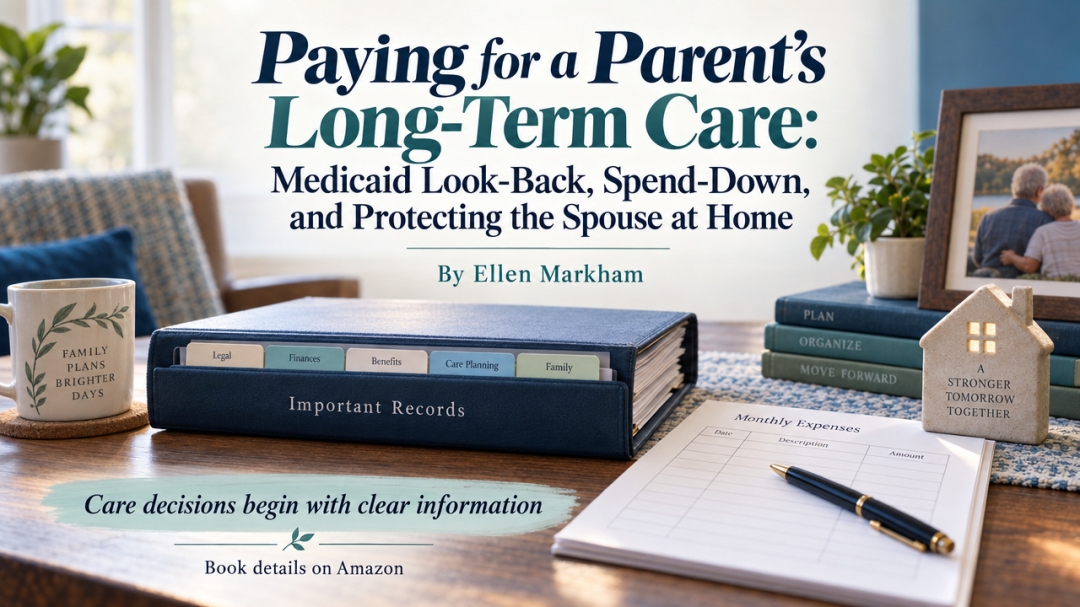

HOUSTON, TX – Nov. 18, 2026 – Ellen Markham’s paying for a parent’s long-term care: Medicaid Look-Back, Spend-Down, and Protecting the Spouse at Home, published November 16, 2026, addresses the family consequences behind care-payment decisions. Its discussion of Medicaid look-back gifts to family places familiar acts of generosity alongside questions about eligibility, documentation, and timing. For adult children helping a parent and spouses trying to maintain a household, the guide examines why paying for care involves more than identifying an account balance or completing an application.
The book begins with a situation that can bring these concerns together: a parent is leaving the hospital, and relatives must consider both a safe care setting and how that care will be funded. A discharge recommendation does not resolve who can sign documents, what coverage applies, or how the other parent will meet ordinary expenses. Markham connects those questions without treating them as interchangeable. Care needs, payment sources, and legal authority each require attention.
That distinction matters to readers who may be taking on unfamiliar responsibilities while continuing to work, raise children, or support a spouse. The guide’s fictional Delgado family gives the competing responsibilities a recognizable setting. Following Frank’s fall and hospitalization, Rosa and their adult children, Elena and Marcus, face decisions that affect both parents. Their circumstances illustrate the book’s broader concern: a plan for one person’s care must also account for the people whose daily lives and finances are connected to it.
Family gifts are one example of an ordinary practice that can take on a different significance during long-term care planning. The book discusses birthday checks, help with an adult child’s bills, vehicle transfers, and changes to property ownership as transactions that may need examination. Its relevance is not limited to families contemplating a large transfer. It also addresses relatives trying to understand earlier decisions made without a future Medicaid application in mind.
Rather than framing generosity as wrongdoing, the guide emphasizes understanding what happened, when it happened, and what records exist. Its treatment of the five-year look-back separates family intentions from the eligibility questions a transaction can raise. The discussion also distinguishes gift-tax concepts from Medicaid transfer rules. Readers are directed toward state-specific advice rather than assuming that a gift considered acceptable for one purpose will receive the same treatment for another.
Is Medicaid spend-down the same as giving money away? In the book’s explanation, it is not. Spending on a parent’s documented care and legitimate needs is different from transferring money or property to someone else without receiving equivalent value. Markham discusses traceable payments, household needs, and supporting receipts while warning against treating gifts as expenses. The distinction gives families a concrete question to bring to a qualified adviser before acting: what is the payment for, and how will its purpose be established?
The subject becomes especially personal when a relative provides care. Families may want to compensate someone who has reduced paid work or taken on extensive responsibilities. The guide addresses caregiver agreements, time records, payment timing, and tax considerations, along with possible conflicts when the paid caregiver also acts as a financial agent. These topics acknowledge the value of family care while explaining why an informal understanding may not answer the legal and financial questions surrounding payment.
The spouse remaining at home is another central reader concern. Who is the community spouse under Medicaid? In the long-term care context discussed in the book, the term refers to the spouse living in the community while the other spouse receives institutional care. Markham examines resource and income allowances alongside that person’s household expenses. The discussion directs attention to the spouse’s continuing needs, rather than treating all family resources simply as money available for a facility bill.
Housing makes those concerns tangible. Mortgage or rent payments, utilities, insurance, medical costs, and repairs may continue even as the couple’s care arrangements change. The book’s spouse-focused worksheet separates ownership questions from monthly household needs and family assignments. It does not replace an official state calculation. Instead, it gives readers a way to identify the expenses and circumstances they need to discuss when asking how the spouse at home will be supported.
The family home also carries emotional meaning that can complicate hurried decisions. Markham addresses home-related eligibility questions, estate recovery, and the risks of transferring a deed without examining the consequences. The book distinguishes a home’s treatment during eligibility review from questions that may arise later. Its discussion asks families to consider control, taxes, ownership, and state rules together, rather than assuming that transferring a house to a child is a simple protective step.
Responsibility within the family is a related theme. A relative who organizes calls and gathers paperwork does not automatically have authority to manage money or sign documents. The guide separates coordination from financial and health care decision-making powers. For siblings dividing tasks, that distinction can clarify why willingness to help and permission to act are not the same thing. The one-page family plan brings authorized roles, backups, and ongoing responsibilities into a shared reference.
Across these subjects, the book presents long-term care funding as a set of connected questions, not a universal strategy or a promise of Medicaid approval. Its notice identifies the material as general information, not legal, financial, tax, or medical advice. Readers are advised to confirm current requirements with their state Medicaid agency and consult a qualified elder law attorney licensed in their state before consequential financial or property decisions. Book information is available at https://www.amazon.com/dp/B0HRSYYWB5. Additional book information is available through Book website.
About Ellen Markham
Ellen Markham is the author of Paying for a Parent’s Long-Term Care: Medicaid Look-Back, Spend-Down, and Protecting the Spouse at Home. Her book addresses care coverage, legal authority, Medicaid eligibility, family transactions, and the needs of a spouse remaining at home. It uses a fictional family, checklists, and worksheets to explain planning questions and emphasizes current state requirements and qualified professional advice.
Video Link: https://www.youtube.com/embed/uePfSESSLsA
Media Contact
Company Name: Paying for a Parent’s Long-Term Care
Contact Person: Ellen Markham
Email: Send Email
Phone: 713-392-6222
Address:450 N Sam Houston Prky E Ste 103
City: Houston
State: Texas
Country: United States
Website: https://oiz4fd8wetf1oh6apb17pdtl.macaly.app
Press Release Distributed by ABNewswire.com
To view the original version on ABNewswire visit: Ellen Markham’s care guide examines decisions that affect the whole family
